Adoption of clean cooking energy in Uganda remains limited, with the majority of households still dependent on traditional biomass fuels like firewood and charcoal. This study aimed to identify the key factors influencing the use of clean cooking energy using nationally representative data from the 2016 Uganda Demographic and Health Survey. Findings revealed that the likelihood of using clean cooking energy was significantly higher among households headed by individuals with a university-level education. Wealthy households were 9.5 times more likely to use clean cooking energy compared to the poorest households. Ownership of household assets such as televisions and radios was also influential, as these media sources increased awareness of modern cooking fuels. Households in Tooro had 90% higher likelihood of using clean cooking energy, while those in North Buganda, Bukedi, West Nile, and Kigezi had significantly lower odds.

In a country where over 75% of the population is under 30, Uganda’s youth are stepping into the spotlight to shape the nation’s energy future. At the second Youth in Energy Conference held last month, more than 300 young Ugandans gathered in Kampala, alongside hundreds more online, to confront one of the country’s most pressing challenges: expanding energy access while protecting the environment. The event, hosted by TotalEnergies EP Uganda and the Society of Petroleum Engineers Uganda Chapter, marked a turning point in youth engagement on energy policy. With direct participation from government officials, industry leaders, and innovators, the conference highlighted the role of young people not only as future stakeholders but also as current drivers of change. As the country navigates its energy future, this generation is stepping forward, not just as participants but as leaders.
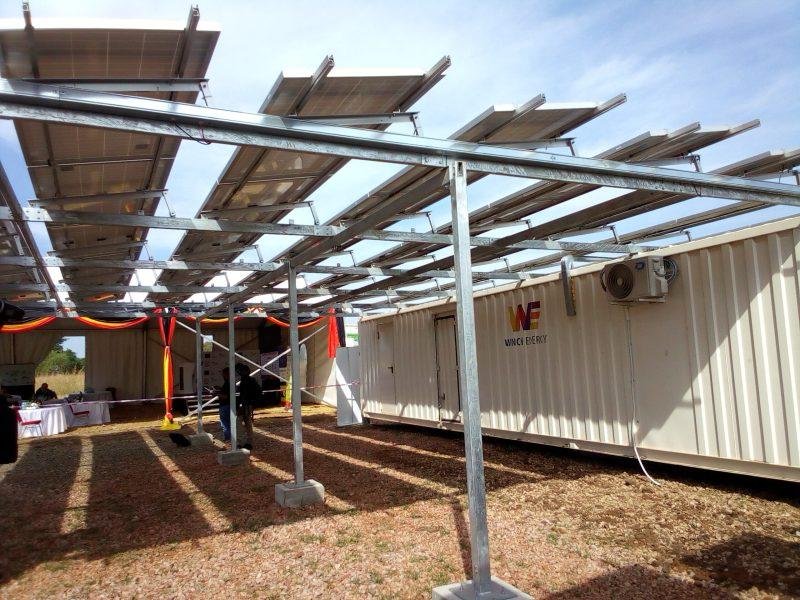
Global investment in the energy transition rose by 20 per cent between 2022 and 2024, reaching approximately Shs 8,676,000 billion (USD 2.4 trillion), according to a major new analysis released today by the International Renewable Energy Agency (IRENA) and the Climate Policy Initiative (CPI). Of this amount, about Shs 2,912,000 billion (USD 807 billion) was directed specifically toward renewable-energy technologies. The report, titled “Global Landscape of Energy Transition Finance 2025,” shows that 96 per cent of all renewable-energy investments were channelled into the power sector. Solar photovoltaic (PV) technology recorded a historic leap, attracting Shs 1,998,000 billion (USD 554 billion) in 2024 alone a 49 per cent increase from the previous year. Despite this growth, the study reveals a decline in investment in manufacturing facilities for solar, wind, battery and hydrogen technologies, which fell by 21 per cent to Shs 368,000 billion (USD 102 billion).
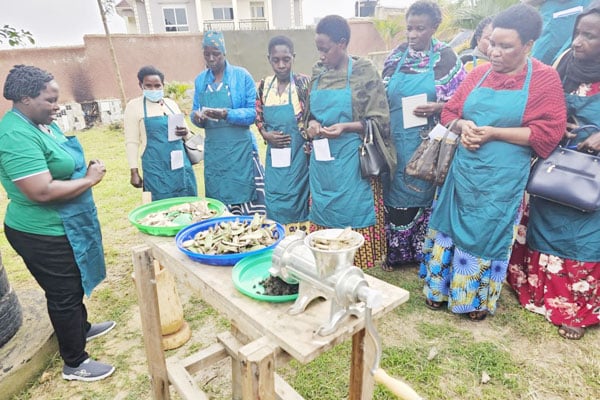
In Uganda, household dependence on wood-based fuels remains overwhelming. According to the 2024 National Population and Housing Census, eight in every 10 rural households rely on firewood for cooking, double the 41% of urban households that primarily use charcoal. Overall, 65 percent of Uganda’s 10.6 million households use firewood as their main energy source. With President Museveni’s ban on charcoal burning, coupled with the rising cost of electricity and the well-documented health and environmental risks associated with wood fuel, the need for affordable and clean energy alternatives has become urgent. It is within this context that six researchers from different universities have developed an affordable bio-digester capable of converting household food waste into biogas for cooking and lighting. The resulting bio slurry is enriched with plant extracts to form an integrated bio-fertiliser and bio-pesticide that boosts crop yields while protecting crops from common pests.
The last-mile connectivity project was launched in 2021 with support from the African Development Bank (AfDB) and other partners to connect 87,500 rural households to affordable electricity. Initially, the project was expected to conclude by the end of 2022. In September 2015, the AfDB extended a $100m to support the initiative, alongside an €11.2 million grant (about $13m) from the EU’s Africa Infrastructure Trust Fund. Ms Nankabirwa also revealed that government had secured EU funding to renovate key hydropower stations, Kiira and Nalubaale, to achieve a combined generation of 380 megawatts. While details on the exact funding amount and timeline were not disclosed, the announcement follows an EU delegation’s tour of the stations last October. Additionally, Uganda Electricity Generation Company Limited invited Expressions of Interest in July for consultants to conduct an Environmental and Social Impact Assessment for the planned rehabilitation of Nalubaale (180 MW) and Kiira (200 MW).towering kilns.

Global investments in the energy transition grew by 20% between 2022 and 2024, reaching $2.4 trillion, with $807 billion directed towards renewable energy technologies, according to a new joint report by the International Renewable Energy Agency (IRENA) and the Climate Policy Initiative (CPI) 2025," reveals that 96% of renewable energy investments went to the power sector, with solar PV hitting a record $554 billion in 2024, up 49%. However, investment in factories producing solar, wind, battery, and hydrogen fell by 21% to $102 billion. Speaking on the report, IRENA Director-General Francesco La Camera emphasised the need for a faster pace, stating, "Funding for renewables is soaring but remains highly concentrated in the most advanced economies. As countries gather at COP30 to advance the 'Baku to Belém Roadmap to 1.3 trillion,' scaling finance for emerging and developing countries is essential to make the transition truly inclusive

Around 700 million people around the world do not have any electricity, and there are many more that only have access to electricity some of the time. Many of these people live in places that are hard to reach, and solar (photovoltaic) panels are a good way for them to get electricity. However, installing new solar panels can be expensive. Knowing how much electricity people need, and how much they might need in the future, is important to make sure that the right number of solar panels are installed, and in the right places, so that nobody goes without electricity. In this article, we discuss how openly available computer programs can help us to work out the best way for these communities to receive electricity.