The Power for Food Partnership Project, a joint initiative by SNV and the IKEA Foundation, is transforming food and energy systems in Uganda, Kenya, Rwanda, and Ethiopia. By integrating Regenerative Agriculture and Productive Use of Renewable Energy (RA-PURE), the project promotes sustainable practices, climate resilience, and community development.
In Uganda, the project is coordinated by SNV and implemented by a consortium of organizations including NREP, NARO, CREEC, NOGAMU, PELUM, ACSA, ACME, and USEA, in partnership with the Ministry of Energy and Mineral Development and the Ministry of Agriculture, Animal Industry and Fisheries.
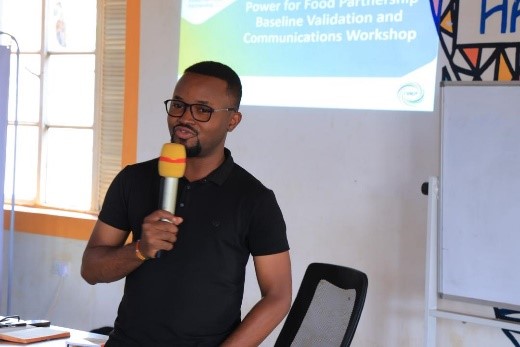
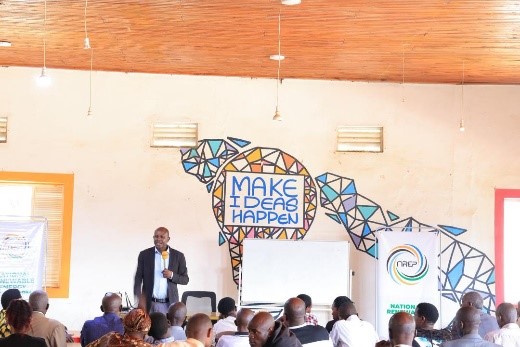
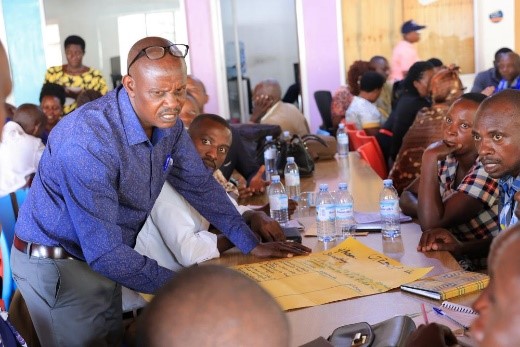
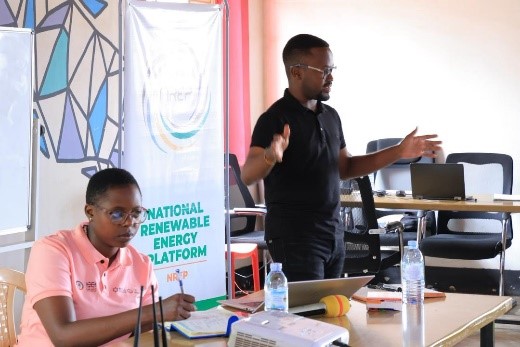
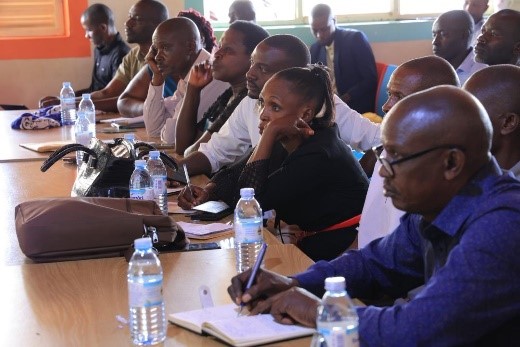
On the 13th of November, 2025, the NREP mission team featured a one-day capacity building workshop during the Renewable Energy Symposium, power for food validation exercise on the baseline survey that had been conducted prior to the event. Technical group work discussions of RA-PURE solutions, presentations of affordable and available agricultural and energy technologies, farmer experience sharing, networking and mobilization of market linkages all happened at the event. The workshop was to validate baseline findings, amplify farmer voices, and strengthen multi-stakeholder collaboration for scaling RA-PURE adoption.
Key Highlights
The NREP mission team actively participated in the one-day workshop.
- Mark Tusiime, the lead facilitator, delivered impactful keynote presentations on RA-PURE practices, guided training sessions, and expertly led group discussions, fostering collaboration and knowledge sharing.
- Naijuka Joan supported facilitation, coordinated logistics, assisted with validation exercises, and contributed to data collection and registration.
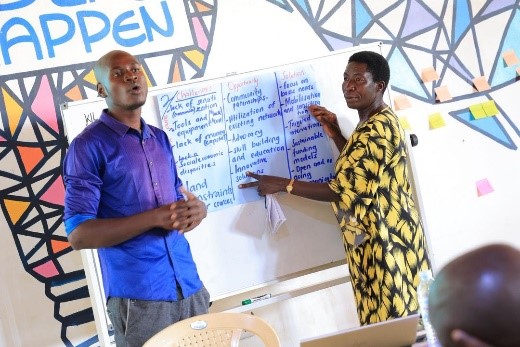
- Participatory group discussions explored opportunities and challenges for RA-PURE integration, generating practical solutions and local adaptation ideas.
- Stakeholder collaboration and campaign messages were refined, focusing on partnerships and effective communication.
Remarks from Mr. Dandus Muwhezi, Agricultural Officer and focal person for the PFP project in Mbarara.
He emphasized that agriculture is a business that requires passion and dedication. He noted that the project would run for a long term of 5 years, enabling people to adapt to RA-PURE practices, build climate resilience, and protect the environment. He urged stakeholders to transition from labor-intensive farming methods to more efficient approaches, saying, Lastly, he encouraged the participants to integrate from spending long hours on our farms for less produce to spending little time on the farms while yielding high produce.
Key Challenges
- Land shortages, soil erosion, and limited water access
- High interest rates and limited financing options
- Poor infrastructure and market accessibility
- Cultural conservativeness and socio-economic disparities
- Climate change impacts and excessive agro-chemical use
- Limited technical skills and awareness gaps
Opportunities
- Linkages to SACCOs and financial institutions
- Government programs such as PDM and extension services
- Expanding markets, ICT, and infrastructure development
- Organic manure and mulches supporting sustainability
- Active farmer groups and community partnerships
- Capacity building through training and awareness campaigns
Solutions
- Village saving groups and affordable SACCO loans
- Supportive government policies and improved infrastructure
- Sensitization on RA-PURE benefits and vocational training
- Climate-smart agriculture, soil conservation, and water harvesting
- Crop rotation, hay production, and value addition initiatives
Conclusion & Recommendations
The RA-PURE initiative has the potential to transform Uganda’s agricultural sector by promoting sustainable practices, enhancing climate resilience, and improving livelihoods. The Mbarara outreach campaign validated baseline findings, amplified farmer voices, and strengthened stakeholder collaboration.
Recommendations:
The RA-PURE initiative has the potential to transform Uganda’s agricultural sector by promoting sustainable practices, enhancing climate resilience, and improving livelihoods. The Mbarara outreach campaign validated baseline findings, amplified farmer voices, and strengthened stakeholder collaboration.
Reccomendations:
- Strengthen stakeholder engagement and collaboration
- Expand farmer training and awareness programs
- Improve access to inclusive financial services
- Invest in rural infrastructure for market access
- Promote climate-smart agriculture and resilient technologies
- Establish robust monitoring and evaluation systems
- Advocate for supportive policies to scale RA-PURE nationally.